
Can we see if we can target Newsome, shit, bass, and pelosi's houses?
Can we see if we can target Newsome, shit, bass, and pelosi's houses?

Archive: https://archive.today/7gcDU
From the post:
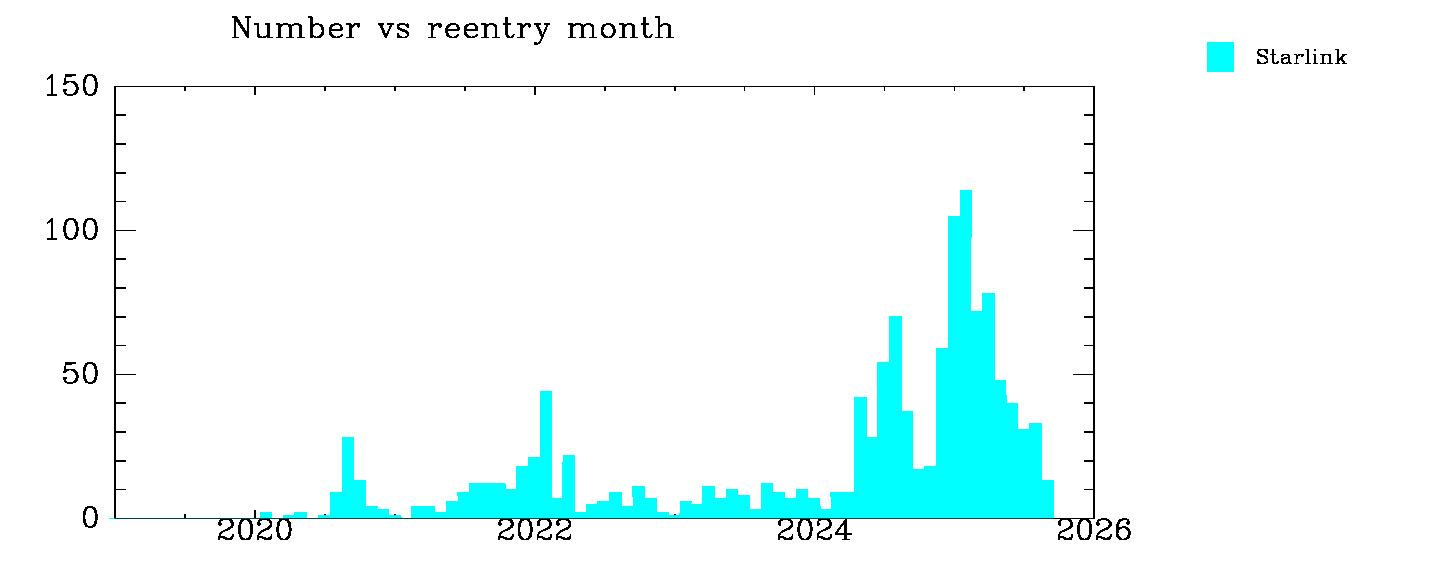
>It might not be long before you look up and see a fiery, slow-moving object streaking across your night sky and, clearly, breaking into pieces. That’s if you haven’t seen such a thing already. There are currently one to two Starlink satellites falling back to Earth every day, according to retired Harvard astrophysicist Jonathan McDowell. His acclaimed website Jonathan’s Space Report is widely regarded as the definitive source on spacecraft that go up … and come down. When we asked him about the deluge of Starlink satellite breakups that have recently been flooding social media, he pointed us to his graph showing Starlink reentries over time.
Can we see if we can target Newsome, shit, bass, and pelosi's houses?
...he pointed us to his graph showing Starlink reentries over time.
Here's the graph (planet4589.org)

(post is archived)