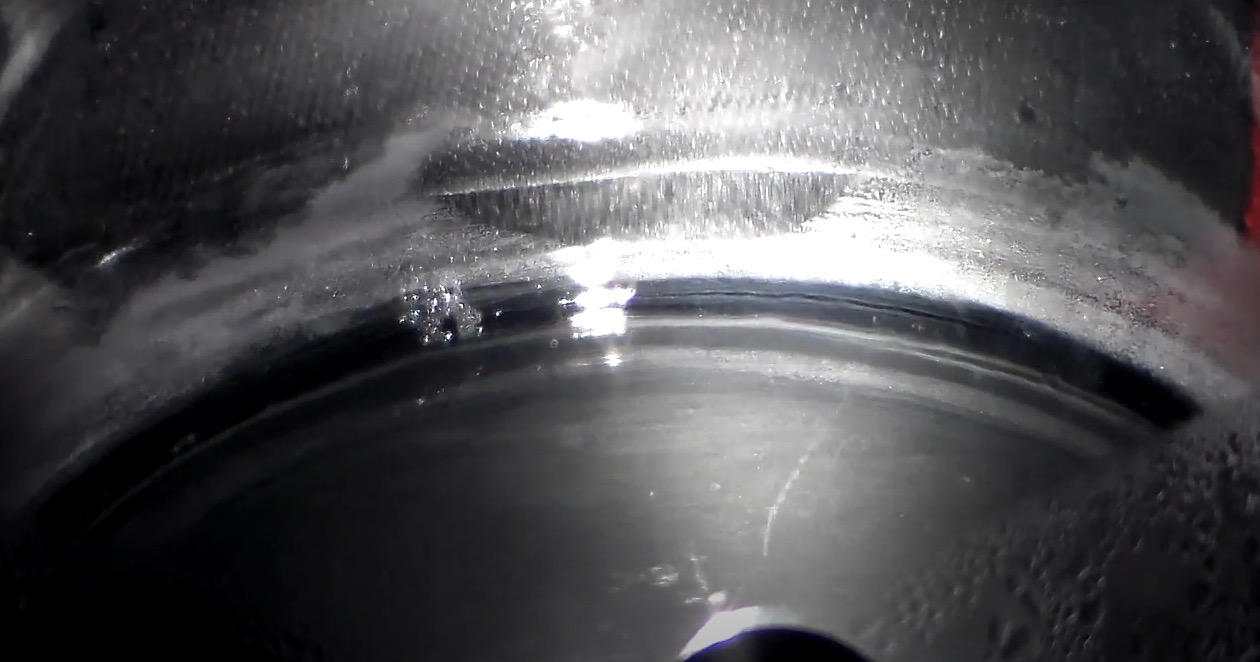
*VIDEO DESCRIPTION A cloud chamber on exhibit at the Tri University Meson Facility a.k.a. TRIUMF at the University of British Columbia in Vancouver, Canada., Also known as the Wilson chamber, it is an ionizing radiation particle detector showing the effect of cosmic radiation, predominantly alpha and beta particles coming from the sun, from space which has penetrated the Earth's atmosphere all the way to sea level. *
Inspired by this video I built a cloud chamber out of some stuff from salvation army and was able to see cosmic ray tracks (technically secondary tracks). Not as big a viewing area as this one from University of British Columbia in Vancouver, but it worked and was in my living room so there you go. It's a fun and pretty simple DIY project if you are into physics. Here's how I did it.
1) I got a round clear thick glass cookie jar from salvation army. About 10 inches in diameter and 14 inches tall, good clear glass.
2) I got a round aluminum metal plate from salvation army. About 1/8 inch thick. I could turn the jar upside down and put it on the plate, and it was a good smooth seal all the way around.
3) Done at salvation army. Head to Meijers and pick up some duct tape, some chemical toe warmers, rubbing alcohol (90%) and a brick of dry ice.
4) At home assembly: From a piece of scrap felt or old dish towel, cut a circle that fits inside nicely on the bottom of the cookie jar. Hot glue it in place inside the jar.
5) When the glue is dry, pour about a shot glass full of rubbing alcohol on the felt/towel to saturate it
6) Turn jar upside down and put it on the metal plate. Use duct tape to seal it all the way around. If excess alcohol drips down, clean it up off the sides or plate first, then seal it.
7) Put metal plate on the dry ice. I was able to break the dry ice cube into several big chunks on which the plate balanced pretty well. I also lined the top of the metal plate outside the glass jar with styrofoam and bubblewrap as insulation.
8) When you put the metal on the dry ice, it will make a high pitch squealing noise for 30 seconds. Don't be alrmed, it's just the metal being supercooled to -70 C.
9) (optional toe warmer step) Activate one or two toe warmer packs. You shake them and they start to heat up and stay warm for hours. Once activated, put them on top of the glass jar so they are on the other side of the glass as the felt/fabric inside the jar. The idea is that the toe warmers will really warm up that fabric through the glass so that it maximizes the amount of alcohol vapor in the air in the glass jar. On top of the toe warmers, put a folded towel as a layer of insulation.
10) now you wait. What's happening is the alcohol at the top of the jar is saturating the air with alcohol vapor, until the atmosphere in the jar is completely saturated. However simultaneously, the region just above the metal plate is being supercooled. After 30 or so minutes, shine a flashlight just above the metal plate inside the glass. There will be a region of supercooled alcohol vapor/mist hovering about an inch above the plate. You'll see it as a constant "rain" or "mist". In that area, you will randomly see bitchin' cosmic ray contrails just like you see in this video.
Not joking. Have fun :)
*VIDEO DESCRIPTION A cloud chamber on exhibit at the Tri University Meson Facility a.k.a. TRIUMF at the University of British Columbia in Vancouver, Canada., Also known as the Wilson chamber, it is an ionizing radiation particle detector showing the effect of cosmic radiation, predominantly alpha and beta particles coming from the sun, from space which has penetrated the Earth's atmosphere all the way to sea level. *
Inspired by this video I built a cloud chamber out of some stuff from salvation army and was able to see cosmic ray tracks (technically secondary tracks). Not as big a viewing area as this one from University of British Columbia in Vancouver, but it worked and was in my living room so there you go. It's a fun and pretty simple DIY project if you are into physics. Here's how I did it.
1) I got a round clear thick glass cookie jar from salvation army. About 10 inches in diameter and 14 inches tall, good clear glass.
2) I got a round aluminum metal plate from salvation army. About 1/8 inch thick. I could turn the jar upside down and put it on the plate, and it was a good smooth seal all the way around.
3) Done at salvation army. Head to Meijers and pick up some duct tape, some chemical toe warmers, rubbing alcohol (90%) and a brick of dry ice.
4) At home assembly: From a piece of scrap felt or old dish towel, cut a circle that fits inside nicely on the bottom of the cookie jar. Hot glue it in place inside the jar.
5) When the glue is dry, pour about a shot glass full of rubbing alcohol on the felt/towel to saturate it
6) Turn jar upside down and put it on the metal plate. Use duct tape to seal it all the way around. If excess alcohol drips down, clean it up off the sides or plate first, then seal it.
7) Put metal plate on the dry ice. I was able to break the dry ice cube into several big chunks on which the plate balanced pretty well. I also lined the top of the metal plate outside the glass jar with styrofoam and bubblewrap as insulation.
8) When you put the metal on the dry ice, it will make a high pitch squealing noise for 30 seconds. Don't be alrmed, it's just the metal being supercooled to -70 C.
9) (optional toe warmer step) Activate one or two toe warmer packs. You shake them and they start to heat up and stay warm for hours. Once activated, put them on top of the glass jar so they are on the other side of the glass as the felt/fabric inside the jar. The idea is that the toe warmers will really warm up that fabric through the glass so that it maximizes the amount of alcohol vapor in the air in the glass jar. On top of the toe warmers, put a folded towel as a layer of insulation.
10) now you wait. What's happening is the alcohol at the top of the jar is saturating the air with alcohol vapor, until the atmosphere in the jar is completely saturated. However simultaneously, the region just above the metal plate is being supercooled. After 30 or so minutes, shine a flashlight just above the metal plate inside the glass. There will be a region of supercooled alcohol vapor/mist hovering about an inch above the plate. You'll see it as a constant "rain" or "mist". In that area, you will randomly see bitchin' cosmic ray contrails just like you see in this video.
Not joking. Have fun :)


(post is archived)