

![Freemasonic Panopticon ("assures the automatic functioning of power") + Orwell (gov use of fear) + Huxley (people chained to desires) = now (hell) [1559x1545 - 895KB]](https://poal.co/static/images/6Q5k7V.jpg)

https://www.sydneycriminallawyers.com.au/app/uploads/2017/07/panopticon.jpg
https://miro.medium.com/max/13850/1*MbzaJbnX5iyUXRs_64aInw.jpeg

https://pbs.twimg.com/media/DzdCCHFW0AcMt_L.jpg
https://i.pinimg.com/originals/d5/a1/7e/d5a17e0d01eec01790bdc12b7e389c00.jpg

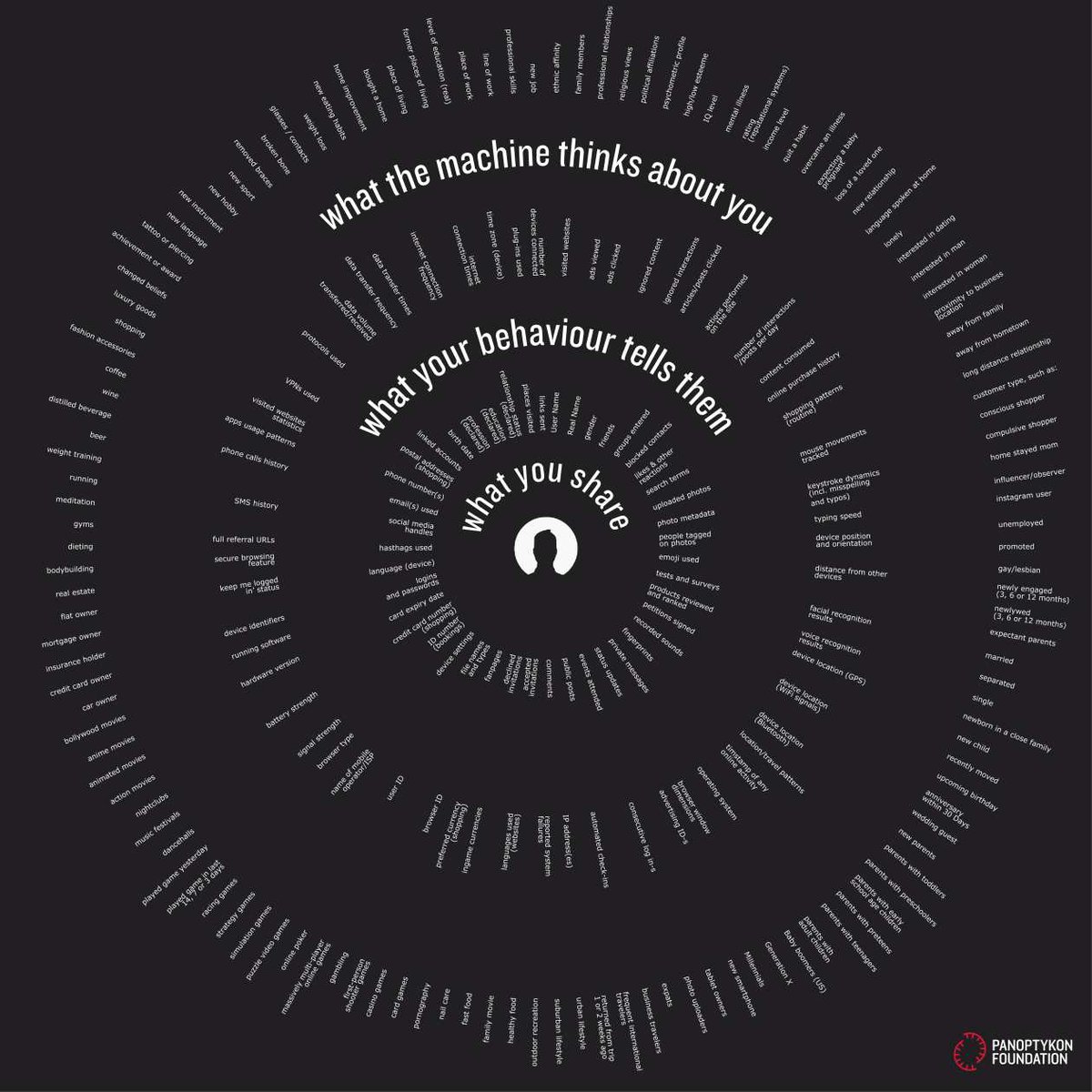
https://uxdesign.cc/the-digital-panopticon-36630d297935
https://www.hauntedcuriosities.com/products/benthams-freemasons Bentham was a Freemason
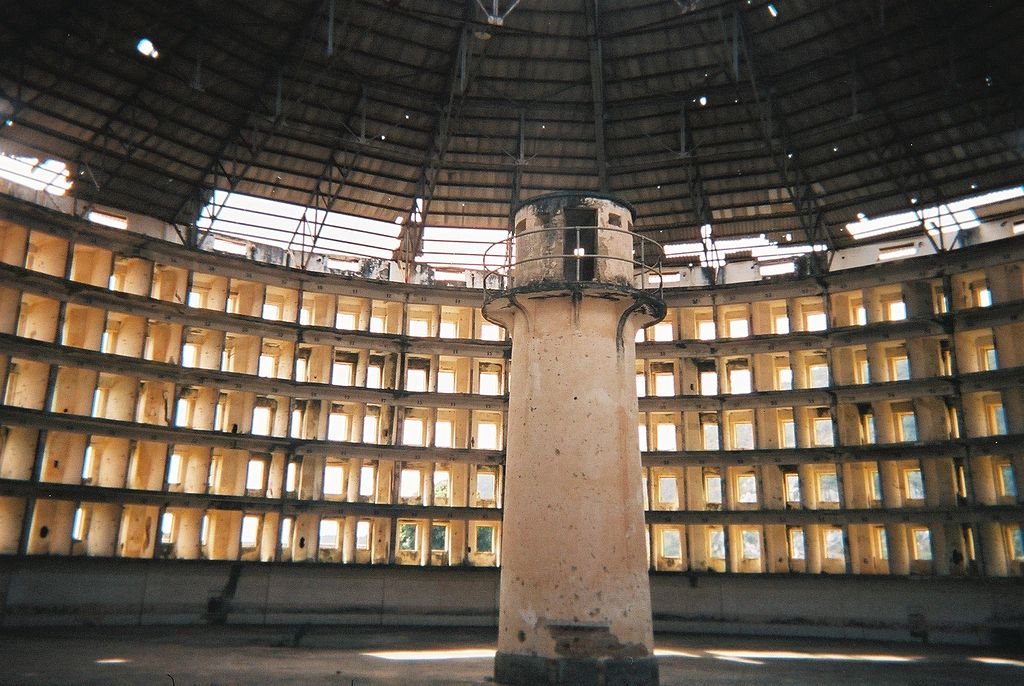
https://www.theislamicmonthly.com/surveillance-spectacle-and-the-panoptic-state/ "an all-seeing being. The symbol of the watchful eye has existed since the earliest civilizations. The Eye of Horus or Ra, representing safety and protection, was an ancient Egyptian symbol; the Eye of Providence, or the all-seeing eye of God".. “panopticon” (pan= all, optic= seeing) ideal..This circular design would put the watcher in the middle, surrounded by those who needed to be watched.
The greatest advantage of this design, argued Bentham, was that it required fewer guards to watch over many subjects; these subjects were never unified as a whole, but kept separate. “[T]o the keeper, a multitude, though not a crowd; to themselves, they are solitary and sequestered individuals”
...included two slits within each cell: peepholes allowing guards to peek into cells without being seen ...French philosopher Michel Foucault in his 1975 book, Discipline and Punish: The Birth of the Prison. In a chapter titled “Panopticism,” Foucault stated that the main purpose of the panopticon was “to induce in the inmate a state of conscious and permanent visibility that assures the automatic functioning of power.”.. Surveillance in a panoptic state becomes so permanent in the minds of the surveilled that the subject fears being watched, even when he/she may not be, thereby ensuring the behavior demanded by authority, even in its absence. In turn, “the perfection of power should tend to render its actual exercise unnecessary,” Foucault wrote. “The inmates should be caught up in a power situation of which they are themselves the bearers.” Thus, the subject enforces its own obedience out of fear of being watched. Hence, the actual mechanism of power need no longer be tangible; it becomes an idea weaved into one’s social existence fueled by fear...
As Bentham suggested, the subject only needed to fear being watched. “Visible: the inmate will constantly have before his eyes the tall outline of the central tower from which he is spied on. Unverifiable: the inmate must never know whether he is being looked at any moment; but he must be sure that he may always be so.” Therefore, “…panopticism constituted the technique, universally widespread, of coercion,” Foucault wrote. The all-seeing eye of surveillance, while heralded as a system to ensure safety, serves to simply enforce the rules of the watcher. Big Brother isn’t watching to make sure you are okay; he’s watching to make sure you do what he wants you to do...This illegal system of surveillance enacted by the government today isn’t simply for protection or national security, as government officials are quick to defend, but rather to enforce subservient behavior within the citizenry.
“Contrary to common belief even among the educated, Huxley and Orwell did not prophesy the same thing. Orwell warns that we will be overcome by an externally imposed oppression. But in Huxley’s vision, no Big Brother is required to deprive people of their autonomy, maturity and history. As he saw it, people will come to love their oppression, to adore the technologies that undo their capacities to think...What Orwell feared were those who would ban books. What Huxley feared was that there would be no reason to ban a book, for there would be no one who wanted to read one.
Orwell feared those who would deprive us of information. Huxley feared those who would give us so much that we would be reduced to passivity and egoism. Orwell feared that the truth would be concealed from us. Huxley feared the truth would be drowned in a sea of irrelevance. Orwell feared we would become a captive culture. Huxley feared we would become a trivial culture. …
Thirty years later, it seems that both Huxley and Orwell were right. The government has followed the Orwellian route: shrouding actions in secrecy, limiting information, concealing truth and inflicting pain as a means of control (as evident in the militarization of police forces, endless wars and use of torture).The people, instead, have followed the Huxleian route: information and truth are not sought after, apathy and narcissism run rampant, trivial matters are discussed ad nauseum, and seeking pleasure and happiness is the primary goal. The government runs on fear; the people run on desire...."
(post is archived)