

>World leaders have a disappointing record when it comes to crises that take decades to unfold. Much greater investment in the prevention of HIV/AIDS in the 1980s could have saved millions of lives and billions of dollars 20 years later, for instance.
Yeah well... The 20 billions dollars seems to be the bad part in this
>The western Sahel region of Africa lies between the Sahara Desert to the north and the Sudanian Savannah to the south. By 2050, the region’s population is expected to more than double, to 450 million1, and temperatures there are expected to rise to about 3 °C above their 1950 level.
We can't do anything for the temperature fugget about it, termostat is too complicated to handle we will do with the evil we know
>Already, hunger and malnutrition are widespread in the Sahel. As droughts and other weather extremes make it even harder for farmers to produce the crops and livestock needed to sustain the growing population, conflict and terrorism will increase2. As conditions worsen, millions of people could die in famines, and there is likely to be unprecedented levels of migration, including to Europe3.
Ok, so europe take note, mark it zero for immigration, prepare now, dead line is 2050. This is sweden 2050 fyfi https://youtu.be/Sam7O1JbmBM?t=39
>Our analyses of population projections and the probable impacts of climate change on food security in this ecologically vulnerable zone indicate that four steps are needed to head off these effects. We call on governments worldwide, together with those of seven countries spanning the Sahel (see ‘Defining the Sahel’), to invest in girls’ education; expand people’s access to family-planning information and services; increase agricultural production; and increase security using local police forces as well as national and international military services.
>Neglect just one of these actions, and political or economic systems could fail.
Ok castrate them all, and eco dictatorship, go for it
https://media.nature.com/w800/magazine-assets/d41586-019-03445-z/d41586-019-03445-z_17372322.jpg
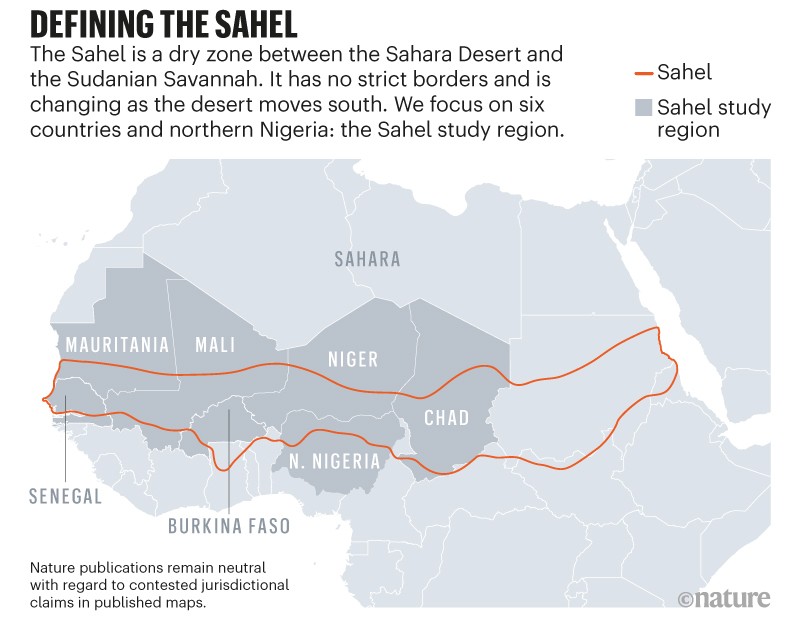
Sub-saharan-canibals, check!
Then they on gon detailing the cost of girls education ...
>After participating in the programme for two years, girls in Kaduna state in northern Nigeria were 20 times more likely to complete secondary school than were other girls in their communities. They also got married around 2.5 years later than non-participating girls12.
>We estimate that a similar ‘safe-space’ programme could be rolled out for all girls aged 14 across the entire SSR for $641 million per year. This represents about 12% of the total annual aid received by the SSR countries (excluding northern Nigeria).
https://gifimage.net/wp-content/uploads/2017/10/nicolas-cage-laughing-gif-imgur-7.gif

...
Seriously this article is the biggest goldmine I've seen in years, it's like a kilometer long of progressive soft genocide on the niggers with our somebody else's money, they are like passing the lub to no end to convince whoever is reading this piece to basically pay for somebody else's problem, as if they didn't have their own fucking problems to begin with, that nobody but them are going to have to deal with
This is the last part of this kilometer long piece
Act now
The humanitarian community tends to develop short-term plans and budgets spanning 3–5 years. Often this is because organizations are constrained by limited resources and are struggling to address immediate problems, such as refugees fleeing conflict or ecological disasters. Yet acting to prevent crises before they become acute is much more cost-effective in the long term.
What’s more, expert recommendations for food security and other development goals almost always sidestep the possibility of slowing population growth through investing in girls and women. This is partly out of fear of being perceived as coercive following abhorrent abuses of reproductive rights — as occurred in India in the 1970s, when the government used various measures from propaganda to bribes to increase male and female sterilization19.
Yet there have been many more cases of coercive pregnancy than coercive contraception. In fact, women being denied information and contraceptives is itself a human-rights violation. In countries that are reliant on US family-planning assistance, modern contraceptive use declined by 14% and abortion rates rose by 40% in 2001 and 2008 when the US government implemented its Mexico City Policy. This blocks federal funding for foreign non-governmental organizations that provide abortion counselling or referrals, advocate to decriminalize abortion or expand abortion services. The current version of the policy is more restrictive and is probably associated with even higher numbers of unintended pregnancies.
The humanitarian implications of the emerging crisis in the Sahel must be brought to the table at high-level meetings of the UN, African Union and EU. The OASIS Initiative (Organizing to Advance Solutions in the Sahel), which was co-founded by A.G. and co-signatory M.P., plans to hold a conference with Sahel and European partners next year to increase donor investments in girls’ education and family planning.
Over the past three decades, we estimate from UNAIDS data that HIV/AIDS has killed around 22 million people in sub-Saharan Africa. Over the coming three decades, population growth and climate change in the Sahel could threaten the well-being of hundreds of millions — unless the four recommendations we lay out here are enacted now.
...
So they speak of solutions for slowing population growth
And they talk about AIDS as if this was a problem a couple of lines later
Again https://gifimage.net/wp-content/uploads/2017/10/nicolas-cage-laughing-gif-imgur-7.gif
perfect comment; excellent points. I have never understood why we pump money into a place that does not need it. They need to take care of themselves.
(post is archived)