

The main exception to this is shiny metal surfaces, which have low emissivities both in the visible wavelengths and in the far infrared. Such surfaces can be used to reduce heat transfer in both directions; an example of this is the multi-layer insulation used to insulate spacecraft.
https://en.wikipedia.org/wiki/Thermal_radiation#Surface_effects
EDIT: That's why the space blankets are shiny, to reduce heat loss.
A radiant barrier is a different thing altogether than a singular object made of the same material. We're talking about whether a shiny steel ball will radiate more heat than a dull steel ball of the same temperature. No barriers or insulation.
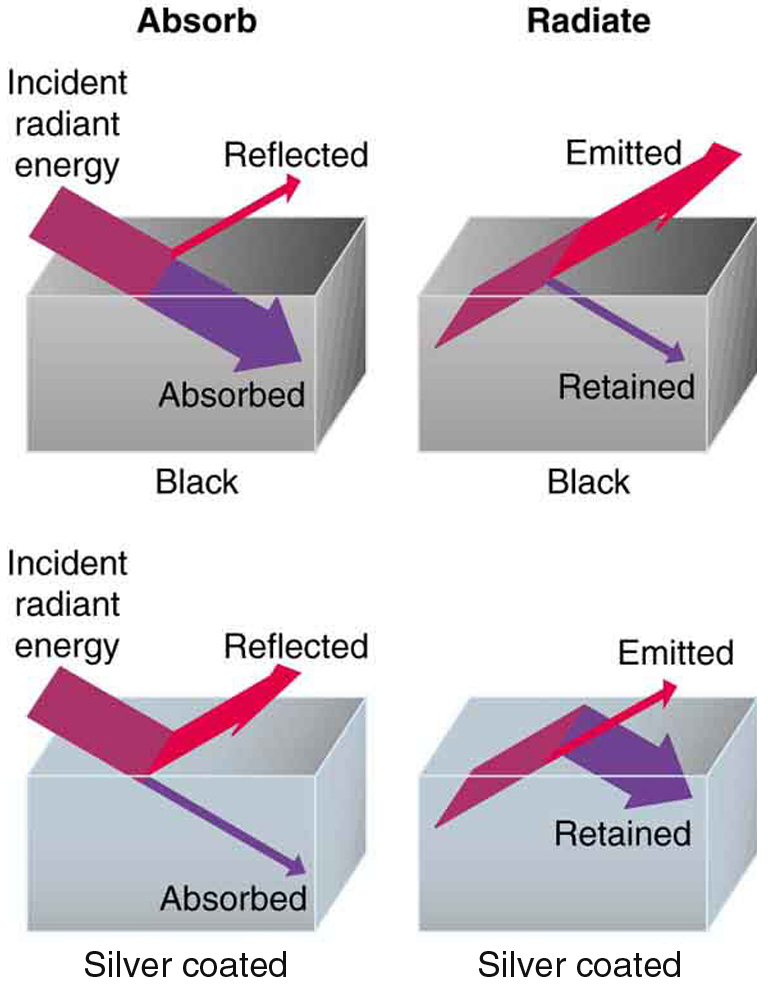
That's a nice picture, but where can we watch two objects of identical composition - differing only in the reflectivity of their surface - heated to identical temperatures cool at vastly different rates?
(post is archived)