

flawed assumptions.
This implies no misfeasance. In fact, there is no pandemic. The virus is a computer model. There is no reference virus. In short, this is a world wide financial scam.
flawed assumptions (intentional, or accidental?) hmm.. related-
Cult Mind Control Techniques used in the Covaids Scamdemic (files.catbox.moe)
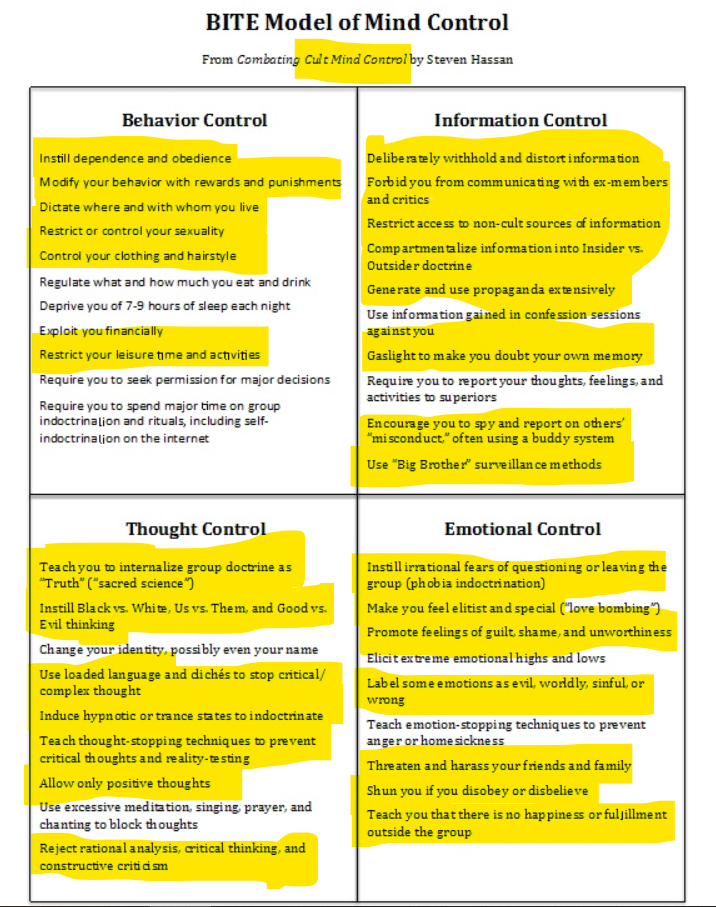
If it is of use to others, the book in PDF, EPUB and MOBI: https://1lib.us/s/Combating%20Cult%20Mind%20Control
"A former cult member, now a counselor helping those affected by destructive cults, Hassan exposes the troubling facts about cults' recruitment, their use of psychological manipulation, and their often subtle influence on government, the legal system, and society as a whole. This updated paperback edition includes a new preface by the author and an expanded bibliography and resource list."
>The virus is a computer model. There is no reference virus.
Either you are saying you're capable to demonstrate that the sars-cov-2 genome sequencing is a forgery, or you're full of shit
So which is it?
Shalom.
When all else failed, call him a jew!
Typical voat retard!
The claimed isolated genome was modelled by the Chinese and shared globally. It is not an actual specimen. All "fact-check" references to its isolation refer back to this computer model. Vaccines were developed based on this computer model. Not a single one of the vaccine drugs uses a weakened version of sars-cov-2.
>The claimed isolated genome was modelled by the Chinese and shared globally. It is not an actual specimen. All "fact-check" references to its isolation refer back to this computer model. Vaccines were developed based on this computer model. Not a single one of the vaccine drugs uses a weakened version of sars-cov-2.
Gross mischaracterization
Over the weekend of January 11-12, the Chinese authorities shared the full sequence of the coronavirus genome, as detected in samples taken from the first patients. "Sequencing the genome of pathogens is crucial for the development of specific diagnostic tests and the identification of potential treatment options," explains Sylvie van der Werf, Director of the National Reference Center (CNR) for Respiratory Viruses at the Institut Pasteur.
Friday January 24, 2020. Detection of the virus confirmed in France
On Friday January 24, late in the morning, the Institut Pasteur received samples of three suspected cases (two patients in Paris and one in Bordeaux). "Using the samples taken from these patients, we detected the novel coronavirus," says Sylvie Behillil, Deputy Director of the CNR at the Institut Pasteur.
From Friday January 24, 2020. Viral genome sequenced at the Institut Pasteur
That same Friday evening, scientists launched the process of sequencing the viral genome based on the samples. The CNR prepared the material for sequencing, ready for P2M to begin work immediately the following Monday. The sequencing run was completed by early evening on the Tuesday, and the scientists used data analysis to obtain the sequence of the whole genome in two of the first three confirmed cases in France. "This proves the efficacy of the CNR's process of analysis based on viral sequencing," continues Vincent Enouf.
https://www.sciencedirect.com/science/article/pii/S1201971220325571
Introduction Severe acute respiratory syndrome coronavirus 2 (SARS-CoV-2) was identified as a causative agent of coronavirus disease 2019 (COVID-19), and its genomic data first became available from China on January 10, 2020. Since then, tremendous efforts have been made to sequence the viral genome from samples collected throughout the world.
Abstract Since the emergence of severe acute respiratory syndrome coronavirus 2 (SARS-CoV-2), tremendous efforts have been made to sequence the viral genome from samples collected throughout the world. Here, we evaluate how various countries have performed in sequencing from the perspectives of “fraction”, “timeliness”, and “openness”. We found that high proportions of samples were sequenced in the UK, the USA, Australia, and Iceland; sequencing was performed promptly in Iceland, the Netherlands, and the Democratic Republic of the Congo; and data were shared timely from the Netherlands, the USA, Iceland, and the UK. Although many developing countries have high numbers of SARS-CoV-2 infected cases but few published sequences, we observed good performance on sequencing efforts for some low- and middle-income countries. Further strengthening of the sequencing capacity at a global level would help in the fight against not only the current pandemic but also future outbreaks of viral diseases.
Forty-nine countries have published >100 genomic sequences. The UK (38.9%) and the USA (22.7%) accounted for the majority of all published genomic sequences (N = 93,817) (Figure 1). The rate of the number of SARS-CoV-2 genomic sequences per reported COVID-19 case varied widely among countries. Iceland sequenced the highest proportion of reported cases (up to 30% of all cases). Because epidemiological situations and timelines differ among countries, we analyzed each country’s genomic sequencing efforts of SARS-CoV-2 from the perspectives of “fraction”, “timeliness”, and “openness” at a relatively early stage of the epidemic
>Not a single one of the vaccine drugs uses a weakened version of sars-cov-2.
For a reason https://www.uptodate.com/contents/covid-19-vaccines-to-prevent-sars-cov-2-infection
Live attenuated vaccines – Live attenuated vaccines are produced by developing genetically weakened versions of the wild-type virus; these weakened viruses replicate in the recipient to generate an immune response but do not cause disease [25,26]. Attenuation can be achieved by modifying the virus genetically or by growing it in adverse conditions so that virulence is lost but immunogenicity is maintained. A live attenuated COVID-19 vaccine would hopefully stimulate both humoral and cellular immunity to multiple components of the whole attenuated virus. Another advantage of live vaccines is that they can be administered intranasally, as with the live attenuated influenza vaccine, which might induce mucosal immune responses at the site of viral entry in the upper respiratory tract. However, safety concerns with live attenuated vaccines include reversion to or recombination with the wild-type virus. Several live attenuated COVID-19 vaccines are in pre-clinical development, but none have reached human trials [2].
(post is archived)