

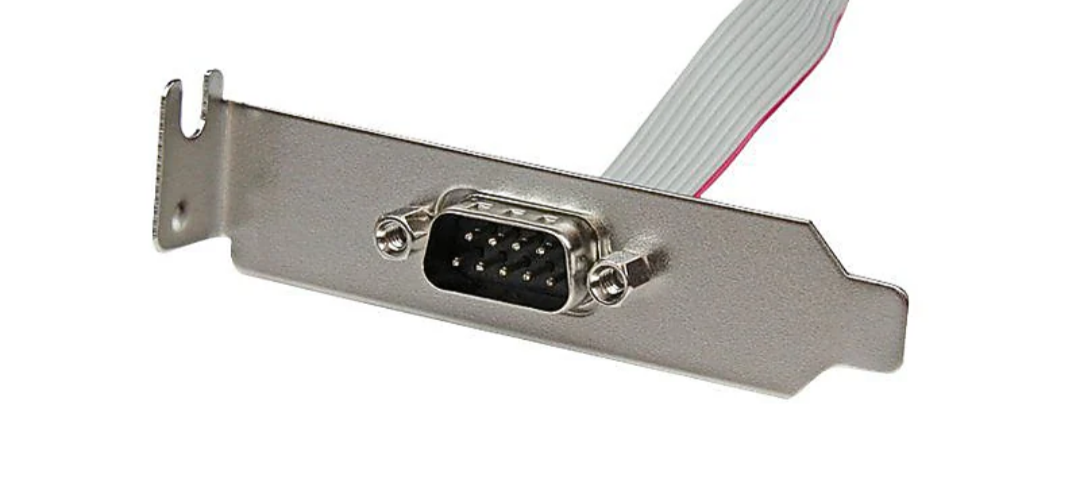
I imagine they are talking about the nine pin serial bus.
@stupidbird Isn’t the ps2 and serial the same protocol with a different plug?
Here is some information.
The terms PS/2 and 9-pin refer to two distinct legacy connector standards with different physical designs, pin counts, and communication protocols.
PS/2 Connectors
Physical Type: Standard PS/2 uses a 6-pin Mini-DIN connector. Protocol: Transmits synchronous serial signals at TTL logic levels (0-5V) for keyboards and mice. Usage: Replaced older AT interfaces and was the standard for PC peripherals before USB. Note: Some sources mistakenly refer to PS/2 controllers as having 9 pins, but the actual PS/2 port standard is 6-pin. 9-Pin Connectors
Physical Type: Typically a DB-9 (DE-9) D-subminiature connector, often referred to as "serial" or "RS-232." Protocol: Transmits asynchronous serial data, often using higher voltage levels (e.g., +10V/-10V) compared to PS/2. Usage: Commonly used for older serial mice, industrial equipment, and computer serial ports. Confusion Point: Some PS/2 adapters use a 9-pin DB-9 shell to house the PS/2 signals, but the internal wiring and protocol remain PS/2-specific. Key Differences
Compatibility: They are not directly compatible due to different pinouts, signal levels, and protocols. Adapters are required to connect devices between these standards, and they are often model-specific. Pin Function: PS/2 uses 6 pins for data, clock, power, and ground. 9-pin serial uses multiple pins for transmit, receive, handshaking, and ground, with only 5-8 pins typically active in older mice. In the context of PlayStation 2 controllers, the connector is a proprietary 9-pin plug (often 6-pin Mini-DIN physically but with 9 pins or a different layout than standard PS/2 PC ports). The 9th pin on PS2 controllers is often unused or reserved for specific peripherals like light guns, whereas standard PC PS/2 ports do not use this pin configuration.
Thanks. TIL that don’t even matter any more.
What @DocAwe said plus this TL;DR:
Serial, as in RS-232x, is a bidirectional serial data flow that uses a line each for TX and RX, and has a whole host of control lines - most of which you don't need if you're just doing simple transfers. It's unpowered, and relies on both devices being powered and understanding the protocol, as RS-232 relies on the devices to provide a method on the serial protocol.
PS/2 is a serial protocol, but it's specifically synchronous bi-directional powered. i.e. one clock line, one data line, one power line, and one ground line. You had different PS/2 ports on a computer because each port had to understand it's specific protocol (kbd, mouse, etc.)
I was not. I was talking about the round ps2 thinking that was what they shitcanned.
Figure serial wouldn’t be killed.
Ps2 has 2 function, kb and mouse.