
Linux: breathe new life into your old hardware! Also Linux: *removes support for i386, i486, bus mouse, etc*
Linux: breathe new life into your old hardware!
Also Linux: \**removes support for i386, i486, bus mouse, etc\**

Archive: https://archive.today/NVnkg
From the post:
>Beyond Linux looking to remove old drivers due to the surge of AI/LLM bug reports, the Linux 7.1 kernel is also removing some old hardware drivers simply on the basis of long obsolete hardware. The input subsystem saw several drivers removed this week for decades old hardware. With the input subsystem updates this week there is a new Charlieplex GPIO keypad driver, the aw86927 driver adding 86938 ASIC support, and the Chrome OS keyboard driver adding support for the Fn-key keymap extension.
Linux: breathe new life into your old hardware! Also Linux: *removes support for i386, i486, bus mouse, etc*
They have to strip out drivers to hide the telementary bloat.
link me
This isn’t Reddit fucking retard. Maybe do some discovery in your own. Maybe start with diaries like Ubuntu and redhat and all their telemetry.
This is not a place for lazy niggers.
Look at this faggot, getting pissed because someone asked for a link to a claim. I wasn't even trying to be a douchebag about it either - apparently you read some shit and had a link. Guess not.
start with diaries like Ubuntu and redhat and all their telemetry.
Linux kernel != distro
Ps2 mouse support?
I imagine they are talking about the nine pin serial bus.
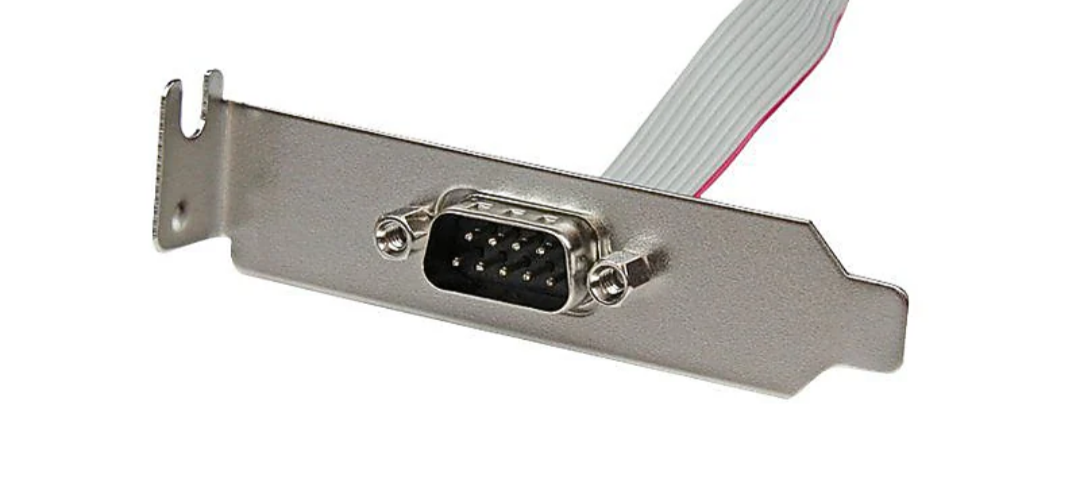
@stupidbird Isn’t the ps2 and serial the same protocol with a different plug?
Here is some information.
The terms PS/2 and 9-pin refer to two distinct legacy connector standards with different physical designs, pin counts, and communication protocols.
PS/2 Connectors
Physical Type: Standard PS/2 uses a 6-pin Mini-DIN connector. Protocol: Transmits synchronous serial signals at TTL logic levels (0-5V) for keyboards and mice. Usage: Replaced older AT interfaces and was the standard for PC peripherals before USB. Note: Some sources mistakenly refer to PS/2 controllers as having 9 pins, but the actual PS/2 port standard is 6-pin. 9-Pin Connectors
Physical Type: Typically a DB-9 (DE-9) D-subminiature connector, often referred to as "serial" or "RS-232." Protocol: Transmits asynchronous serial data, often using higher voltage levels (e.g., +10V/-10V) compared to PS/2. Usage: Commonly used for older serial mice, industrial equipment, and computer serial ports. Confusion Point: Some PS/2 adapters use a 9-pin DB-9 shell to house the PS/2 signals, but the internal wiring and protocol remain PS/2-specific. Key Differences
Compatibility: They are not directly compatible due to different pinouts, signal levels, and protocols. Adapters are required to connect devices between these standards, and they are often model-specific. Pin Function: PS/2 uses 6 pins for data, clock, power, and ground. 9-pin serial uses multiple pins for transmit, receive, handshaking, and ground, with only 5-8 pins typically active in older mice. In the context of PlayStation 2 controllers, the connector is a proprietary 9-pin plug (often 6-pin Mini-DIN physically but with 9 pins or a different layout than standard PS/2 PC ports). The 9th pin on PS2 controllers is often unused or reserved for specific peripherals like light guns, whereas standard PC PS/2 ports do not use this pin configuration.
What @DocAwe said plus this TL;DR:
Serial, as in RS-232x, is a bidirectional serial data flow that uses a line each for TX and RX, and has a whole host of control lines - most of which you don't need if you're just doing simple transfers. It's unpowered, and relies on both devices being powered and understanding the protocol, as RS-232 relies on the devices to provide a method on the serial protocol.
PS/2 is a serial protocol, but it's specifically synchronous bi-directional powered. i.e. one clock line, one data line, one power line, and one ground line. You had different PS/2 ports on a computer because each port had to understand it's specific protocol (kbd, mouse, etc.)
I was not. I was talking about the round ps2 thinking that was what they shitcanned.
Figure serial wouldn’t be killed.
Ps2 has 2 function, kb and mouse.