WelcomeUser Guide
ToSPrivacyCanary
DonateBugsLicense

©2025 Poal.co

729

A week ago while I was panning for gold I followed a mountain stream to its source 2 miles off of the trail and it was just ejecting water from under the ground. Today, I followed another stream that was 5 miles away in the same mountain range for the sole purpose of inspecting the source. To my surprise it was the same. I know I’m not the only one to ponder this but it got me thinking.. how can the water table be so high here? How can this just be from rain water while the mountain acts as an aquifer? These streams feed grand falls and rapids a few miles downstream. How do they not run out of water during the dry season (now)? Is it possible that there is some other forces at work here? Geological pressures putting forces on deep underground aquifers causing them to eject from the mountain ranges where the bedrock is fractured?

It’s probably a stupid question.. but all my life I assumed these streams originated from hundreds of brooks feeding them. I assumed that as I followed these streams I would find a body of water that gradually narrowed as I passed smaller and smaller brooks feeding it until I came upon a dry gully.

A week ago while I was panning for gold I followed a mountain stream to its source 2 miles off of the trail and it was just ejecting water from under the ground. Today, I followed another stream that was 5 miles away in the same mountain range for the sole purpose of inspecting the source. To my surprise it was the same. I know I’m not the only one to ponder this but it got me thinking.. how can the water table be so high here? How can this just be from rain water while the mountain acts as an aquifer? These streams feed grand falls and rapids a few miles downstream. How do they not run out of water during the dry season (now)? Is it possible that there is some other forces at work here? Geological pressures putting forces on deep underground aquifers causing them to eject from the mountain ranges where the bedrock is fractured? It’s probably a stupid question.. but all my life I assumed these streams originated from hundreds of brooks feeding them. I assumed that as I followed these streams I would find a body of water that gradually narrowed as I passed smaller and smaller brooks feeding it until I came upon a dry gully.

(post is archived)

[–] 14 pts

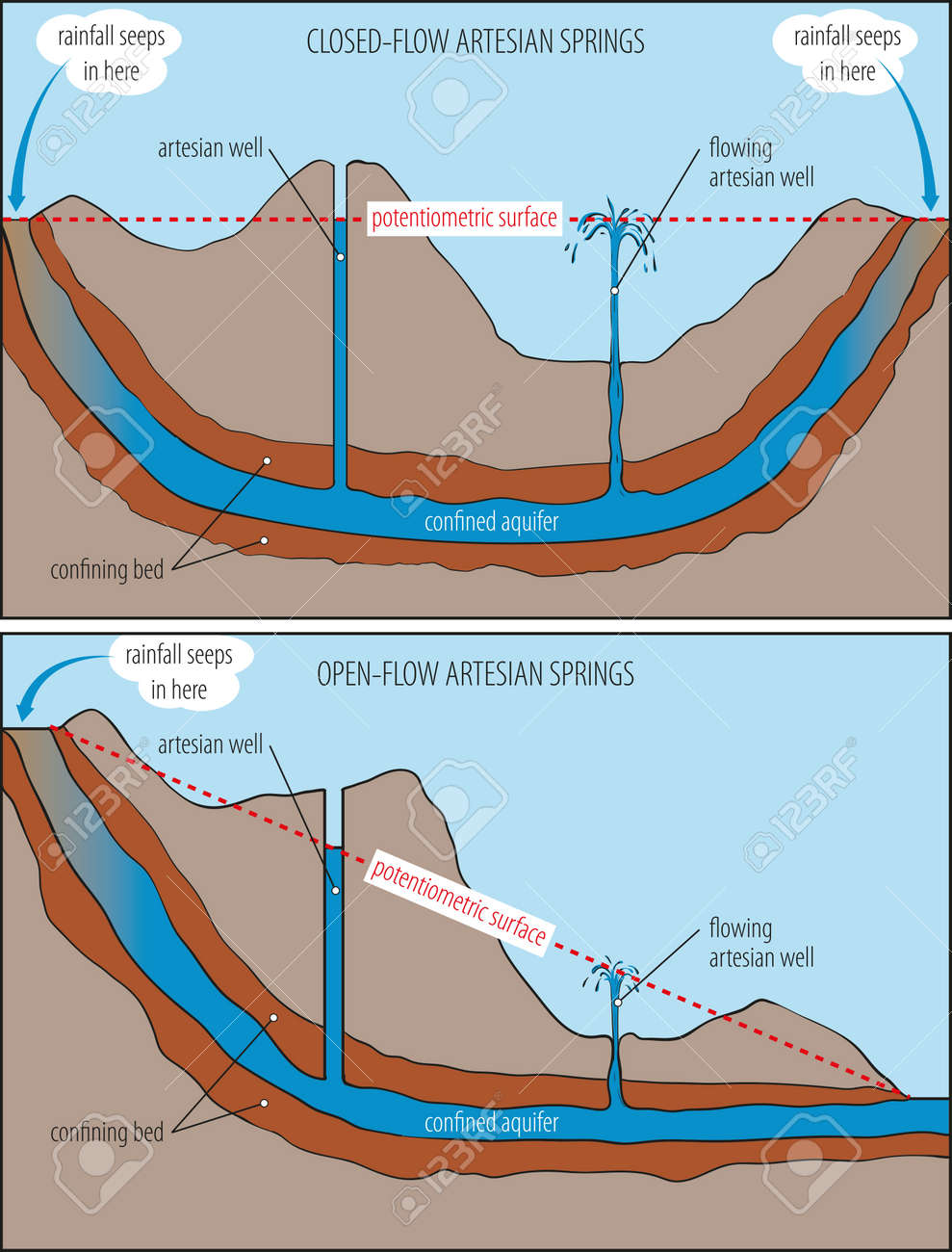
Most of the rain that falls on the mountain is absorbed into the rocks and soil. When the water pressure builds up underground you get an

[–] 8 pts

So would a fair hypothesis be that the majority of these mountain streams are from the weight of the mountains pushing down on aquifers which relieve their pressure through fractured bedrock high up in the mountains?

[–] 4 pts

Don’t confuse artesian springs with seepage springs. The water coming out of the side of a mountain at high elevation isn’t being pushed up from thousands of feet below. Seepage springs are caused by the rock and soil of the mountain absorbing precipitation (rain and snow) which forms a water table at that elevation, and the spring is where the water finds its way out.

[–] 2 pts

Have you ever crunched the numbers before, though? Napkin math tells me that if it rained exactly 1” of precipitation over a square mile, that would be enough water to fill 2.19 Olympic swimming pools. A semi small mountain stream that moves 24 cubic inches of water at 3 miles an hour will drain those two swimming pools of water in just 73 hours. We get around 50 inches of rain a year give or take around here. Unless my math is just way off, which is highly likely, it just doesn’t seem like a logical conclusion that the source for these two streams are just seepage springs.

[–] 0 pt

My childhood neighbors had a spring in their back yard it ruined** their pool two times. I remember sitting staring out my window down into their backyard watching the workers tear it down when they finally quit trying to make it work

[–] 0 pt

Yes. Also simple gravity. Think of the top of the mountain as being a bowl of water with a small hole in the side. If the water level is above the hole, gravity and water pressure push water out of the hole. I have one on my property and the water being filtered through the mountain is the best I have ever had.
[–] 6 pts

Lazy programming. Happens all the time in the games we play too the Developers just pick a point to start the water/river graphics. ;-)

[–] 1 pt

That you Gen Z? You win, best cyber answer to a real life question. Thanks for the chuckle.

[–] 5 pts

here is a fun water rabbit hole for you https://primarywater.org/

[–] 5 pts

This is just what I needed. Shit man, of course ocean water isn’t “contained” by the coasts of the continents. Does ocean water feed underground aquifers or do the aquifers feed the oceans. Is every large body of water connected by some underground labyrinth of water filled fissures and cracks?

It totally makes sense that the mantle can create water considering how easy of a reaction it is to make the compound. This makes so much more sense than the gay comet impacts.

[–] 2 pts

where do you think the water of the Great Flood came from? waters of the deep.

[–] 1 pt

I love this .

[–] 4 pts

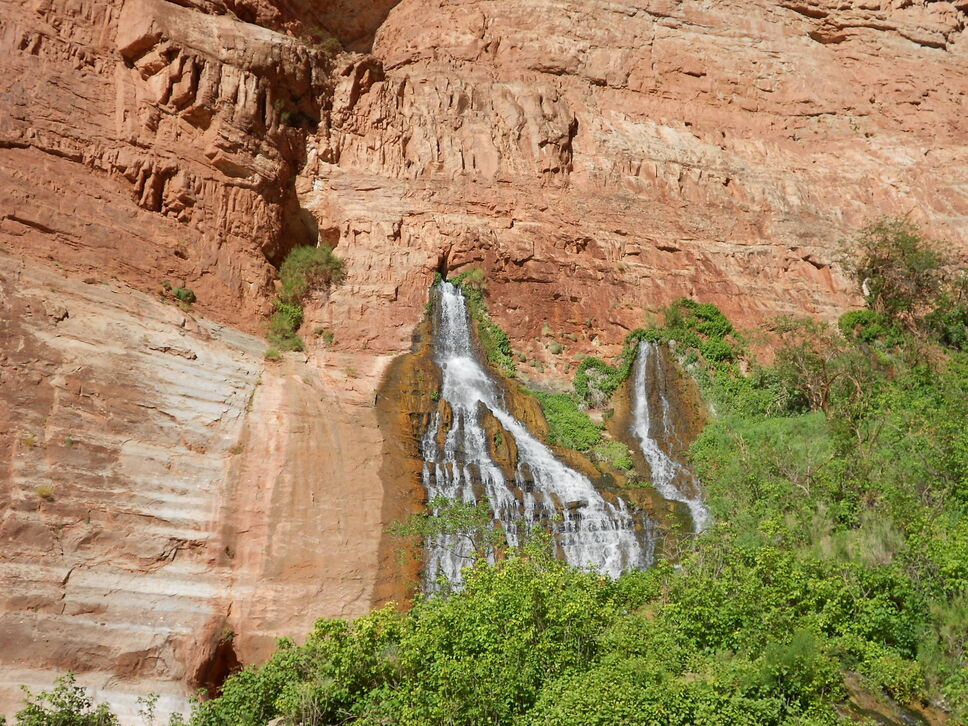
One of the remote trails from the North Rim of the Grand Canyon has a river gushing out the wall of a cliff and the water temp is 40 something F. It obviously comes from an aquifer, not the water table.

[–] 2 pts

It makes me wonder how much of the water we see in rivers is actually not from rain runoff and is from aquifers.

[–] 2 pts (edited )

Damn what a question. I have known about these types of springs, but never thought about it. I know of some of these springs on volcanoes in Central America where there is rarely snow. It might have to do with the altitude of the mountains, I'm assuming the aquifers on the mountain are constantly being refilled from the clouds.

The mountains are constantly at cloud level, so they must be absorbing moisture 24/7 from them. The springs I know are lower than the cloud level.

[+] [deleted] 2 pts
[–] 2 pts

I always figure it get's absorbed into the ground then eventually leaks out some distance down. The further down, the more leaks and they start feeding into others.

[–] 1 pt
[–] 1 pt

Never made any sense to me, either.

[–] 1 pt

Ground weight pressure in some cases, run off in others.

Load more (13 replies)